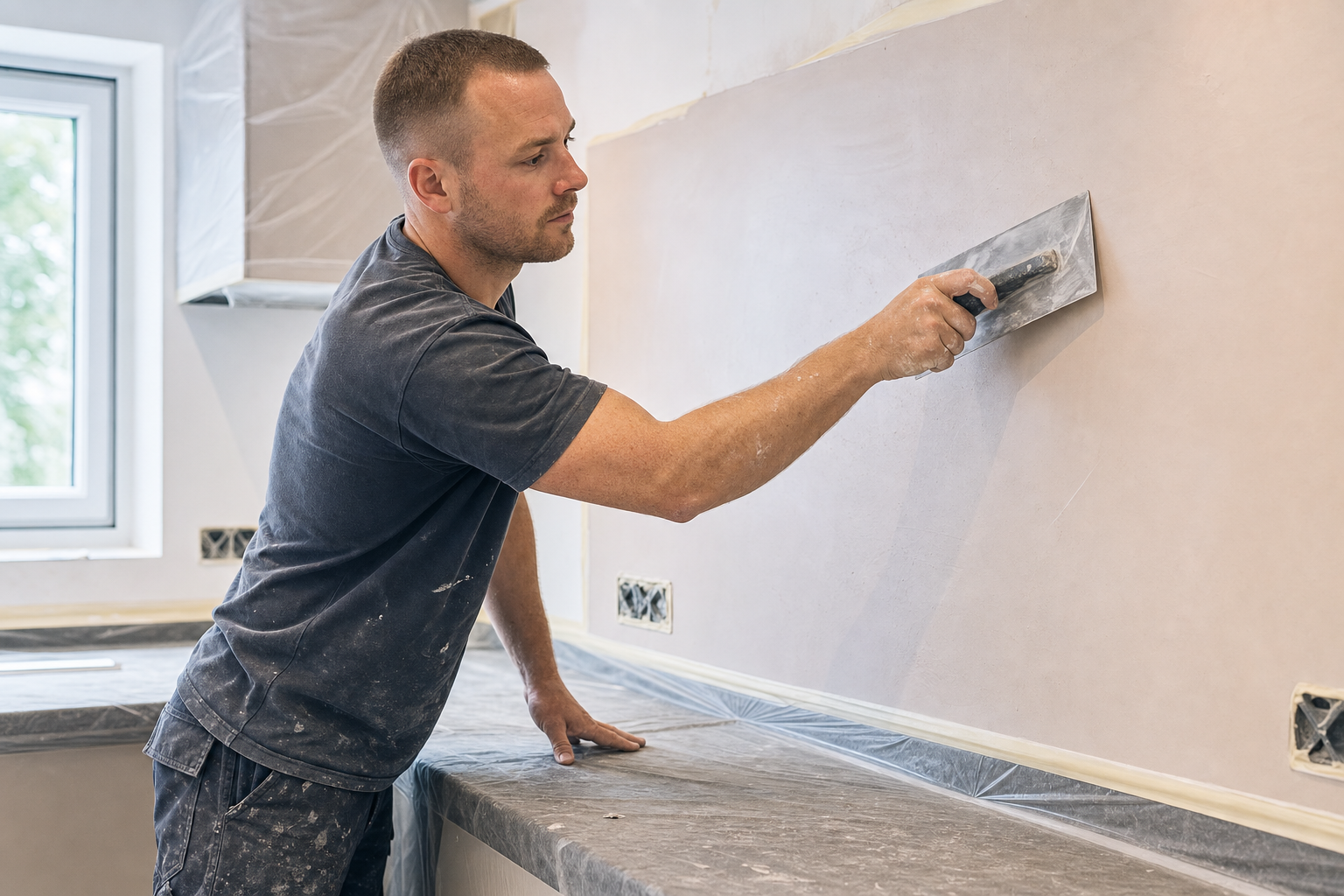
Why thorough wall preparation ensures a cleaner fit
Damage made good
We deal with the rough areas left behind by removals and altered service routes.
Cleaner cabinet lines
Smooth walls give fitted units and splashbacks a far better surface to follow.
Timed to suit the job
Plastering is carried out after the messy stages, not dropped in at the wrong point.
Put rough kitchen walls back in order
Take old units and tiles off a kitchen wall and the truth usually turns up underneath. Chased-in services, rough patches, broken skim and odd repairs all show themselves once the room is opened up. With Father & Son Kitchens, kitchen plastering in Wallsend helps turn that mess back into a sound surface, whether the job needs patch repairs, making good around altered pipework or wider work to even the room out before fitting.
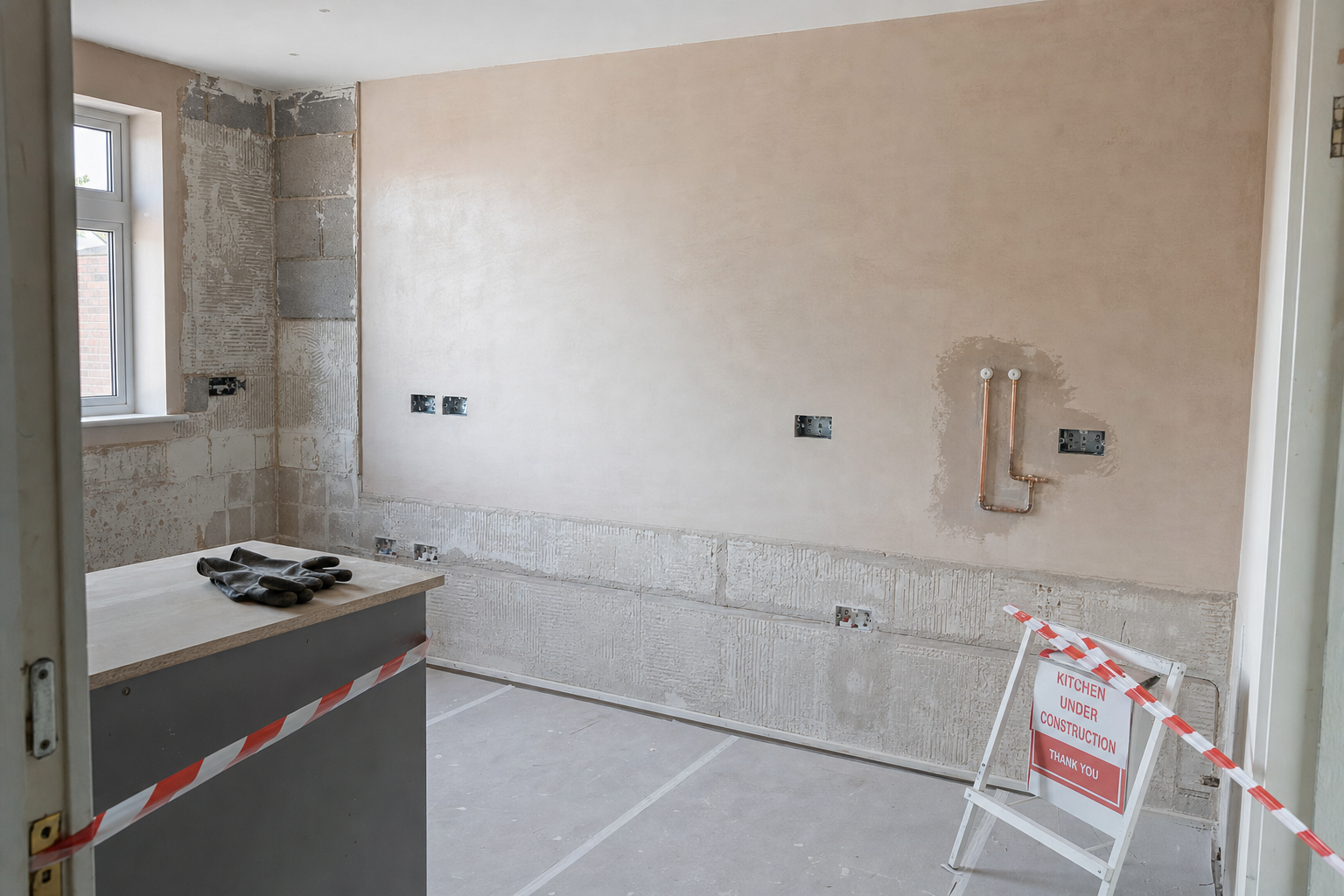
The right stage for a better finish
Plastering has to land at the right point in the schedule. Too early and later work damages it. Too late and cabinets, splashbacks or paint are held up. We carry it out after the disruptive preparation stage so walls have the best chance of drying and settling before the final finish goes on. A smoother surface from Father & Son Kitchens makes it far easier to achieve clean cabinet lines and neat wall finishes.
Frequently asked questions
Why is plastering often needed after a rip-out?
Removing old units, tiles and services can expose damaged, uneven or incomplete wall surfaces. Plastering helps put those areas right so the room is ready for the fitted parts and decorative finishes that come later.
When in the job should plastering happen?
Usually after the disruptive preparation work and before the final fitted or decorative stages. That order helps protect the fresh surface from being damaged again and gives the following trades a cleaner base to work from.
Do walls need time to dry before the next stage?
Yes. Freshly plastered surfaces need suitable drying time before later finishes are applied. Allowing for that stage helps reduce problems with paint, splashbacks or fitted elements that depend on the wall being ready.